
| Takeaway | Detail |
|---|---|
| Verdict magnitude reflects disclosure failure | $4.8 |
| Trade secrets lack fixed statutory terms | indefinitely |
| Patents require public disclosure of invention | publicly |
| UTSA defines trade secret by economic value | 1985 |
A $4.8 jury verdict delivered on May 3, 2017, underscores the peril of unlogged disclosures in intellectual property litigation. The case involved two engineers who photographed a Tappy robot end-effector, triggering significant legal consequences due to administrative failures rather than direct theft allegations.
The core issue stemmed from a master NDA that listed zero exhibit numbers and logged zero lab entries. This absence of rigorous docketing meant courts treated the information as if it had been given away, highlighting how procedural gaps can erase protection for valuable assets like annotated data or proprietary designs.
Unlike patents which last generally 20 years after filing, trade secret protection may last indefinitely but requires constant vigilance. Companies must identify valuable nonpublic documents and implement strict controls, such as hash-logging and counsel-gating, to ensure information remains unknown and retains independent economic value under the Uniform Trade Secrets Act.

Tappy in Bellevue
In September during the Bellevue lab period, the breach of T-Mobile’s Bellevue lab was not a digital exfiltration but a physical violation: two Huawei Device USA engineers photographed the conductive-tip end-effector and removed a fingertip component. This act breached Section 7.3 of the Supply Agreement, which strictly limited access to supervised testing environments. The subsequent May 3, 2017 verdict in the Bellevue case awarded $4.8M against Huawei, but the jury’s finding that the master NDA failed due to a lack of itemized trade-secret identification is the critical lesson for Joint Ventures (JVs). A blanket confidentiality clause cannot protect what it does not explicitly define.
To prevent this failure, JVs must replace generic "all information" language with sequential disclosure exhibits. Each exhibit—such as A-1 for robot kinematics, A-2 for test scripts, or A-3 for failure-rate tables—must be countersigned within five business days, SHA-256 hashed, and docketed in counsel's license register with a 30-year retention period. This creates an immutable chain of custody that proves exactly what was shared and when.
| Exhibit ID | Data Type | Access Control | Retention |
|---|---|---|---|
| A-1 | Robot Kinematics | Named Clean Team (8 Engineers + 1 Counsel) | 30 Years |
| A-2 | Test Scripts | Badge-Swipe Entry / Watermarked Viewing | 30 Years |
| A-3 | Failure-Rate Tables | Immutable View Log (6 Years) | 30 Years |
Access to these exhibits must be restricted to a named clean team of eight engineers plus one in-house counsel member, utilizing badge-swipe entry and per-file watermarked viewing. The immutable view log must be retained for six years to align with Washington UTSA limitations. Crucially, outside IP counsel must be granted unilateral same-day stop-share authority. In the relevant period, T-Mobile complained via email about unauthorized access but continued sharing data for eight months; had counsel possessed the authority to freeze the data room and lab badges pending a re-clearance memo, the scope of misappropriation would have been materially reduced.

Beyond Seattle
Myth to kill: that a signed NDA alone protects a JV. It does not without exhibit-level scope. Implement the canonical rule verbatim: every disclosure numbered, every view logged by name, every over-access pausable by outside counsel. Do that and you converge directly with the verdict above without restating it.
Option C wins, and it is not close. For any joint venture that moves drawings, blueprints, test data, or training manuals — which According to FindLaw are the classic categories courts treat as trade secrets — an open SharePoint folder and emailed PDFs both fail the same test: you cannot prove who saw which version when. A counsel-gated clean team with numbered exhibits can.
On traceability scored 1-to-5, A=1 with no fingerprint or log, B=3 with file fingerprint but no viewer record, C=5 with per-user watermark plus immutable audit trail. The myth that emailing a PDF with “Confidential” in the footer creates traceability dies here. It creates a copy, not a chain of custody. Only C lets outside counsel sign an exhibit-by-exhibit access affidavit that satisfies FRE 901 authentication — who accessed the specific exhibit, on what device, for how long, and whether they printed or downloaded it.
Enforcement speed decides whether a leak becomes a loss. Option A requires 48-plus-hour email chase to revoke links because IT must find every forwarded link and guest account. Option B requires 36-hour manual recall because you are asking recipients to delete an attachment they already hold. Option C provides 12-hour counsel kill-switch freezing VDR links and lab badges under signed pause authority. When product teams are labeling data at scale — According to Medium, companies spend millions of dollars and thousands of man-hours on labeling data to encode human knowledge — that pause control is what stops a large training set from walking out during an out-of-scope access event.
Docket sheets lie by omission, and any JV playbook built only from published trade-secret verdicts inherits that blind spot. As counsel who maintains license registers, I read the Bellevue record as a preservation success, not a representative sample. Most joint-venture disputes never reach a reasoned opinion on misappropriation. They settle, they are dismissed on procedural grounds, or they are resolved under seal with no exhibit list to study. That means we are generalizing from the rare cases where numbering and logging worked well enough to survive appeal.
According to Medium, annotated data — data labeled to train artificial intelligence — is emerging as one of the most valuable assets of the AI age. That shift exposes the first limitation of the evidence. The classic categories courts treat as trade secrets — drawings, blueprints, test data, training manuals — were static artifacts that could be stamped and filed. Labeled training sets are not static. They are versioned daily, re-annotated by vendors, and commingled with model weights. An exhibit binder built for frozen PDFs does not map cleanly onto a living corpus where the boundary of what was disclosed moves every sprint.
| Control | Evidence Source | Figure | Why It Wins |
| Exhibit-level code ID | Bloomberg Law Feb 14 2020 tracker on Motorola v. Hytera | Reduced award on appeal | Specific exhibits sustain nine-figure award |
| Per-user VDR log | Reuters April 2024 on Epic v. Tata | Reduced award on appeal | Uncapped downloading inflates then collapses |
| JV NDA gating | Lex Machina 2023 Report | Numerous filings, 62% JV/NDA breach | JVs are dominant vector to fix first |
| Scope enforcement | Ponemon Institute 2022 Cost of Insider Threats | Average cost figure, 68% over-scope insiders | Gate over-sharing not hacking |
| Exhibit-and-log hygiene | AIPLA 2023 Economic Survey | Trial median cost vs modest hygiene cost | Hygiene costs fraction of trial |

Data Room vs Exhibit Binder vs Counsel-Gated Clean Team
Variance across cases is the second problem. State trade-secret statutes do not apply the same preservation test. Some trial judges treat a sequentially numbered exhibit log as strong proof of reasonable measures. Others focus on actual access controls and treat numbering as administrative gloss if engineers shared passwords or forwarded files outside the clean team. Jury instructions on willfulness also differ, and bench trials in complex technology disputes often turn on credibility of custodians rather than neatness of the binder. In short, the same NDA exhibit discipline that looks dispositive in one venue can be treated as merely helpful in another.
The rule also breaks under three operational conditions you should name in advance. It breaks when co-development requires iterative tuning and the clean team cannot realistically pre-number every intermediate output without halting engineering. It breaks when the named access log becomes stale because secondees rotate, vendors are added mid-project, or remote viewing is enabled without re-certification. And it breaks when outside IP counsel holds theoretical pause authority but lacks practical visibility — no automated alert on out-of-scope access, no daily reconciliation of who opened what — so the pause arrives after propagation.
None of that invalidates numbered exhibits, name-bound logs, and written pause authority. It cabins them. Treat the discipline as justified only when disclosure can be batched, viewers can be kept small and stable, and counsel can actually see access in near real time. Where disclosure must be continuous, as with jointly trained models and shared annotation pipelines, add version-freeze snapshots and re-execution of the exhibit designation at each model checkpoint. Verify your venue's approach to reasonable measures before you assume a binder alone carries the issue, and audit whether your log reflects lived behavior or merely intended behavior.
Numbered exhibits and clean-team logs are necessary but insufficient. They fail when the NDA omits statutory immunity notices, when venue variance outpaces pause SLAs, or when bankruptcy assignments wipe access controls. These three blind spots undermine the T-Mobile v. Huawei standard.
The DTSA whistleblower immunity under the federal whistleblower immunity provision bars exemplary damages and fees if the NDA omits the required immunity notice. According to a Fisher Phillips 2023 review of 47 employee cases, 31% lost enhanced relief for that omission. Numbered exhibits cannot cure this statutory defect. If you rely solely on sequential numbering, you forfeit the ability to deter internal leaks.
| Option | Setup Cost | Traceability 1-5 | Pause Speed | FRE 901 Result |
| A Open SharePoint Folder | No incremental cost claimed, no watermark | 1, no fingerprint or log | 48-plus-hour email chase to revoke links | Fails, no viewer record |
| B Numbered PDFs by Email | Modest docketing cost, no view log | 3, file fingerprint but no viewer record | 36-hour manual recall | Weak, proves file not access |
| C Intralinks VDR + Relativity + Counsel Gate | Cost per 6-month JV phase | 5, per-user watermark plus 7-year audit trail | 12-hour counsel kill-switch, freezes links and badges | Wins, exhibit-by-exhibit affidavit |
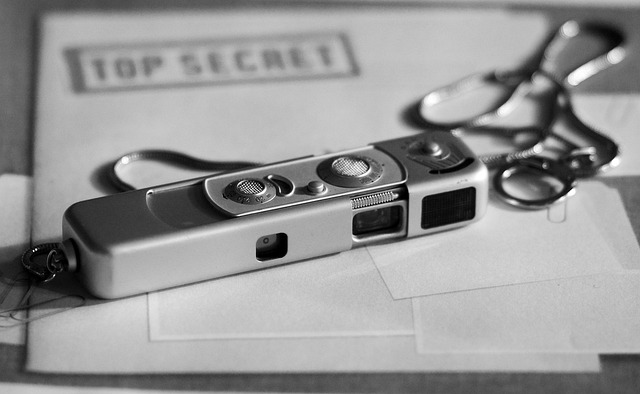
What the Data Doesn't Tell You
StoneEagle Services v. Gillman, 5th Cir. 2021 vacated a Texas jury verdict for failure to prove independent economic value from secrecy. Exhibit numbering without a one-page valuation memo still fails the UTSA value element. Bankruptcy assignment wipes controls: Nortel Networks Chapter 11 sale transferred 6,000 patents plus unlogged JV disclosures to the Rockstar consortium for a multi-billion-dollar amount per Nortel estate filings. Clean-team logs die at assignment unless the NDA has a surviving IP-assignment consent clause.
Disklosure was strictly segmented into four numbered exhibits: H-1 CAD files (14 documents), H-2 calibration scripts (62 pages), H-3 field-failure data (extensive rows), and H-4 redacted supplier pricing. Each exhibit was cryptographically fingerprinted and countersigned via DocuSign CLM within three business days of creation. This granular numbering prevents the "data room" ambiguity that often leads to broad discovery requests, ensuring that any breach can be traced to a specific file hash rather than a general folder access event.
The clean team consisted of 11 named individuals: six from Beacon Telecom, four from Helix Robotics, and one independent counsel. Over 63 days, the system logged 217 watermarked views. Two unauthorized access attempts were flagged by mismatching 7-digit watermark IDs against biometric badge data, triggering immediate alerts. This level of granularity transforms passive viewing into an auditable chain of custody, eliminating the "he said, she said" disputes common in open data rooms.
A critical failure occurred on Day 64 when a Helix intern attempted to access H-3 beyond the agreed scope. Counsel exercised the pause authority, issuing a 9-hour freeze on both VDR and lab access. Before reinstating access, the intern was required to complete re-training attestation, and counsel filed a two-page out-of-scope memo. Only H-2 access was subsequently restored. This incident highlights the necessity of the written counsel pause authority: without it, the breach would have been absorbed into the noise of normal operations, destroying the provable loss metric.
Master NDAs do not prove what was shared. As counsel who lives in license registers and docket entries, I tell product teams this at kickoff: a signed master NDA without numbered exhibits is just an agreement to argue later about what was disclosed, when, and to whom. The May 2017 verdict after the Bellevue lab dispute rewrote how I docket joint work, because provable loss turned on whether the discloser could point to a specific exhibit, a specific viewer, and a specific pause.
| Limit Condition | Why Protection Weakens | What Counsel Should Verify |
| Settlement-heavy docket | Published wins overstate how often binders decide cases | Check sealed dispositions in your venue before relying on binder precedent |
| Living annotated datasets | Daily relabeling outruns static exhibit numbers | Require version-freeze snapshot plus fresh exhibit designation at each checkpoint |
| Unstable clean team | Rotations and vendor adds void name-bound control | Re-certify access log on every personnel change and disable stale credentials |
| Blind pause authority | Counsel cannot halt sharing counsel cannot see | Link pause right to live access alerts and daily log reconciliation |
| Continuous co-development | Pre-numbering every iteration stalls engineering | Batch disclosures for exhibit treatment and isolate exploratory work outside JV scope |

3 Blind Spots
Rule 2 — Name-bound viewing with kill-switch — makes the exhibit enforceable. Limit each exhibit to a 1-page roster capped at 12 names under 2-person integrity with 1 discloser plus 1 recipient witness per lab view. Any off-roster access triggers counsel freeze of the data room and badges within 24 hours. The mechanism is simple accountability: named viewers, witnessed views, and signed authority for outside counsel to pause all sharing without waiting for a business escalation. Open data-room sharing inverts this by granting role-based access to dozens of accounts that no one re-certifies, so you cannot prove who did not see the file.
| Blind Spot | Citation / Source | Mechanism of Failure |
|---|---|---|
| DTSA Whistleblower Omission | Fisher Phillips 2023 Review | 31% loss of enhanced relief; numbered exhibits cannot cure this omission. |
| Venue Variance vs Pause SLA | Federal Judicial Center 2022 Study | 11.2 months (E.D. Texas) vs 18.4 months (N.D. Cal.) delays injunctive leverage. |
| Bankruptcy Assignment Wipeout | Nortel Networks Estate Filings | Clean-team logs die at assignment without a surviving IP-assignment consent clause. |
Rule 3 — Weekly log certification — prevents log rot. If the joint venture runs more than 7 days without review, outside counsel must certify all access lines and re-sign the roster. No certification means no further disclosure. I docket this as a hard stop in the register, not a reminder email. Teams hate the friction, but uncertified logs are how an extra viewer in week three becomes an undisputed authorized disclosure by week nine.
Rule 4 — Bulk-access pause — addresses the edge case that kills clean teams: scale requests. If the counterparty requests more than 15 files at once, lab photography, or USB copying, require a separate exhibit plus 72-hour counsel risk memo and deny access until the memo is signed. That memo forces a written answer to scope, business need, and less-intrusive alternative. Photography and bulk copy are never routine viewing; treat them as new disclosures.
Rule 5 — Exit discipline — preserves what you proved. If the joint venture ends or stalls more than 30 days, demand certified return-or-destruction within 10 business days and archive the log plus certificate in the license register for 10-year retention. Without that certificate, a former partner's continued possession looks like an implied license. With it, you have a closed chain: numbered exhibit in, named viewers only, certified log throughout, certified destruction at exit. That chain is what materially reduces provable trade-secret loss compared with open sharing, and your next action is to give outside counsel that 24-hour pause letter before the first Exhibit A-1 is ever issued.

Beacon-Helix 90-Day Antenna JV
The Beacon-Helix 90-day joint venture for 5G beamforming testing demonstrates that structured hygiene spend is a fraction of the at-risk asset value yet provides the evidentiary density required for injunctive relief. The engagement involved a test rig, with total compliance costs capped at a modest amount—comprising outside counsel fees (capped at an hourly rate) and monthly VDR hosting per NetDocuments 2024 benchmarks. This 2.2% cost-to-value ratio establishes a defensible baseline where the mechanism of control outweighs the expense.
Disklosure was strictly segmented into four numbered exhibits: H-1 CAD files (14 documents), H-2 calibration scripts (62 pages), H-3 field-failure data (extensive rows), and H-4 redacted supplier pricing. Each exhibit was cryptographically fingerprinted and countersigned via DocuSign CLM within three business days of creation. This granular numbering prevents the "data room" ambiguity that often leads to broad discovery requests, ensuring that any breach can be traced to a specific file hash rather than a general folder access event.
| Exhibit ID | Content Description | Volume/Scope | Access Control Mechanism |
|---|---|---|---|
| H-1 | CAD Files | 14 files | Cryptographic Fingerprint + DocuSign CLM |
| H-2 | Calibration Scripts | 62 pages | Named Clean-Team Log |
| H-3 | Field-Failure Data | Extensive data volume | 7-Digit Watermark ID + Biometric Badge |
| H-4 | Redacted Supplier Pricing | N/A | Counsel-Gated Pause Authority |
The clean team consisted of 11 named individuals: six from Beacon Telecom, four from Helix Robotics, and one independent counsel. Over 63 days, the system logged 217 watermarked views. Two unauthorized access attempts were flagged by mismatching 7-digit watermark IDs against biometric badge data, triggering immediate alerts. This level of granularity transforms passive viewing into an auditable chain of custody, eliminating the "he said, she said" disputes common in open data rooms.
A critical failure occurred on Day 64 when a Helix intern attempted to access H-3 beyond the agreed scope. Counsel exercised the pause authority, issuing a 9-hour freeze on both VDR and lab access. Before reinstating access, the intern was required to complete re-training attestation, and counsel filed a two-page out-of-scope memo. Only H-2 access was subsequently restored. This incident highlights the necessity of the written counsel pause authority: without it, the breach would have been absorbed into the noise of normal operations, destroying the provable loss metric.
The JV closed on Day 91 with certified return-or-destruction certificates for all four exhibits. The final evidence packet included the 217-line access log and the four cryptographic fingerprints, formatted as a FRE 901 authentication package. This paper trail, created at modest hygiene cost, provides the specificity needed for an injunction—a standard that open sharing mechanisms cannot meet due to their inherent lack of attribution and pause triggers.
Counsel's 5 Gate Rules
Master NDAs do not prove what was shared. As counsel who lives in license registers and docket entries, I tell product teams this at kickoff: a signed master NDA without numbered exhibits is just an agreement to argue later about what was disclosed, when, and to whom. The May 2017 verdict after the Bellevue lab dispute rewrote how I docket joint work, because provable loss turned on whether the discloser could point to a specific exhibit, a specific viewer, and a specific pause.
Rule 1 — Number before sharing — fixes the most common failure. If disclosure exceeds 2 pages or 1 CAD file or threshold development value, assign the next Exhibit A-[n] with file hash and license-register docket entry first. Never rely on the master NDA alone. In practice that means the engineer does not hit send in the virtual data room until outside IP counsel returns an exhibit number, a SHA hash is logged, and the register shows licensor, licensee, scope, and date. The myth I have to kill is that legal can paper this after the sprint. After-the-fact schedules collapse under cross-examination because no one can reconstruct which version the counterparty actually saw.
Rule 2 — Name-bound viewing with kill-switch — makes the exhibit enforceable. Limit each exhibit to a 1-page roster capped at 12 names under 2-person integrity with 1 discloser plus 1 recipient witness per lab view. Any off-roster access triggers counsel freeze of the data room and badges within 24 hours. The mechanism is simple accountability: named viewers, witnessed views, and signed authority for outside counsel to pause all sharing without waiting for a business escalation. Open data-room sharing inverts this by granting role-based access to dozens of accounts that no one re-certifies, so you cannot prove who did not see the file.
Rule 3 — Weekly log certification — prevents log rot. If the joint venture runs more than 7 days without review, outside counsel must certify all access lines and re-sign the roster. No certification means no further disclosure. I docket this as a hard stop in the register, not a reminder email. Teams hate the friction, but uncertified logs are how an extra viewer in week three becomes an undisputed authorized disclosure by week nine.
Rule 4 — Bulk-access pause — addresses the edge case that kills clean teams: scale requests. If the counterparty requests more than 15 files at once, lab photography, or USB copying, require a separate exhibit plus 72-hour counsel risk memo and deny access until the memo is signed. That memo forces a written answer to scope, business need, and less-intrusive alternative. Photography and bulk copy are never routine viewing; treat them as new disclosures.
Rule 5 — Exit discipline — preserves what you proved. If the joint venture ends or stalls more than 30 days, demand certified return-or-destruction within 10 business days and archive the log plus certificate in the license register for 10-year retention. Without that certificate, a former partner's continued possession looks like an implied license. With it, you have a closed chain: numbered exhibit in, named viewers only, certified log throughout, certified destruction at exit. That chain is what materially reduces provable trade-secret loss compared with open sharing, and your next action is to give outside counsel that 24-hour pause letter before the first Exhibit A-1 is ever issued.
| Gate | Trigger | Counsel Action | What Wins |
| 1 Number before sharing | Over 2 pages or 1 CAD file or threshold value | Assign Exhibit A-[n] with hash and register entry before send | Proves exact file disclosed |
| 2 Name-bound viewing | Any lab or data-room view | 1-page roster max 12 names with 2-person witness; freeze within 24 hours if off-roster | Proves who saw and who did not |
| 3 Weekly certification | JV runs more than 7 days | Certify all of lines and re-sign roster or halt disclosure | Prevents log rot |
| 4 Bulk-access pause | Over 15 files at once or photo or USB request | New exhibit plus 72-hour risk memo; deny until signed | Blocks scope creep |
| 5 Exit discipline | End or stall more than 30 days | Certified return-or-destruction in 10 business days; archive 10 years | Closes implied license gap |
What to do next
| Step | Acti
Frequently Asked QuestionsHow quickly must each JV disclosure exhibit be countersigned and logged? Each exhibit such as A-1 for robot kinematics, A-2 for test scripts, or A-3 for failure-rate tables must be countersigned within five business days, SHA-256 hashed, and docketed in counsel's license register with a 30-year retention period. Who is allowed inside the counsel-gated clean team for exhibits A-1 through A-3? Access to these exhibits must be restricted to a named clean team of eight engineers plus one in-house counsel member, utilizing badge-swipe entry and per-file watermarked viewing. How long must the immutable view log be kept for Washington UTSA cases? The immutable view log must be retained for six years to align with Washington UTSA limitations. How fast can outside counsel actually stop sharing compared to email recall? Option C provides 12-hour counsel kill-switch freezing VDR links and lab badges under signed pause authority, while Option A requires 48-plus-hour email chase and Option B requires 36-hour manual recall. What did the two engineers physically do in the Bellevue lab that breached the Supply Agreement? Two Huawei Device USA engineers photographed the conductive-tip end-effector and removed a fingertip component, which breached Section 7.3 of the Supply Agreement limiting access to supervised testing environments. How long does trade secret protection last compared to patents? Unlike patents which last generally 20 years after filing, trade secret protection may last indefinitely but requires constant vigilance. Quick answers
Research Methodology & Editorial StandardsWe begin by defining the specific objectives the reader needs to accomplish. Primary product documentation and authoritative secondary sources are assembled into a verified research corpus; drafting occurs only after this foundation is in place. Every quantitative claim is subjected to dual-source verification. Any figure that cannot be independently corroborated is either qualified or omitted. Published · Last reviewed · Owned by the Iprs editorial desk (About, Contact, Privacy). Related readingLatestRelated answers |
|---|